Exercising in Cold Weather
It is winter and getting regular exercise during cold weather months can be challenging. Winter exercise can boost immunity during cold and flu season. The CDC reports that a few minutes of exercise per day can help prevent simple bacterial and viral infections. When you exercise, your immune cells increase and inflammation decreases. Exercise is helpful to lower your risk for disease. You may prefer to exercise indoors but we would like to share how getting some outdoor winter workouts can be beneficial.
What are the benefits of cold weather workouts
Outdoor exercise is a great way to take in small doses of sunlight. According to the American Heart Association, sunlight can help improve mood and help with vitamin D intake. For those who deal with seasonal affective disorder (SAD), getting outside can help trigger the release of endorphins and serotonin which are the “feel good” chemicals for your brain. Studies have even found that being in nature and having proximity to trees can lower blood pressure and decrease stress related hormones. Symptoms of anxiety and depression may even be reduced. When you workout outdoors in the cold, your body must work harder to create more heat to keep warm. This is a metabolism booster and helps burn more calories.
Exercise in any form is an easy cure to fight stress and may lead to better quality of sleep. Colder temperature workouts can increase your endurance and stamina. Cardiovascular health may also be boosted as the heart must work harder in lower temperatures. This is also a concern for those with cardiovascular disease and modifications may be needed.
How to prepare for a cold weather workout
- Check the weather and the wind chill. If it is too cold, it would not be wise to go outside. A heavy wind can quickly lower your body temperature. The risk of frostbite is less than 5% when the air temperature is above 5 F but the risk rises as the wind chill falls. When wind chill levels are below minus 18F, frostbite can occur on exposed skin in 30 minutes or less. Early warning signs of frostbite include numbness, loss of feeling or a stinging sensation. Use common sense when it comes to weather extremes.
- Be sure to let someone know your exercise route and your expected return time. Take a fully charged cell phone with you.
- Muscles tend to be colder and less flexible in the morning. Consider early afternoon walk/workout especially if the sun is out to ensure both you and the temperatures have warmed up a bit.
- Warm up inside first. Take 5-10 minutes and complete some low level aerobic exercise like jumping jacks, pumping your arms or jogging in place.
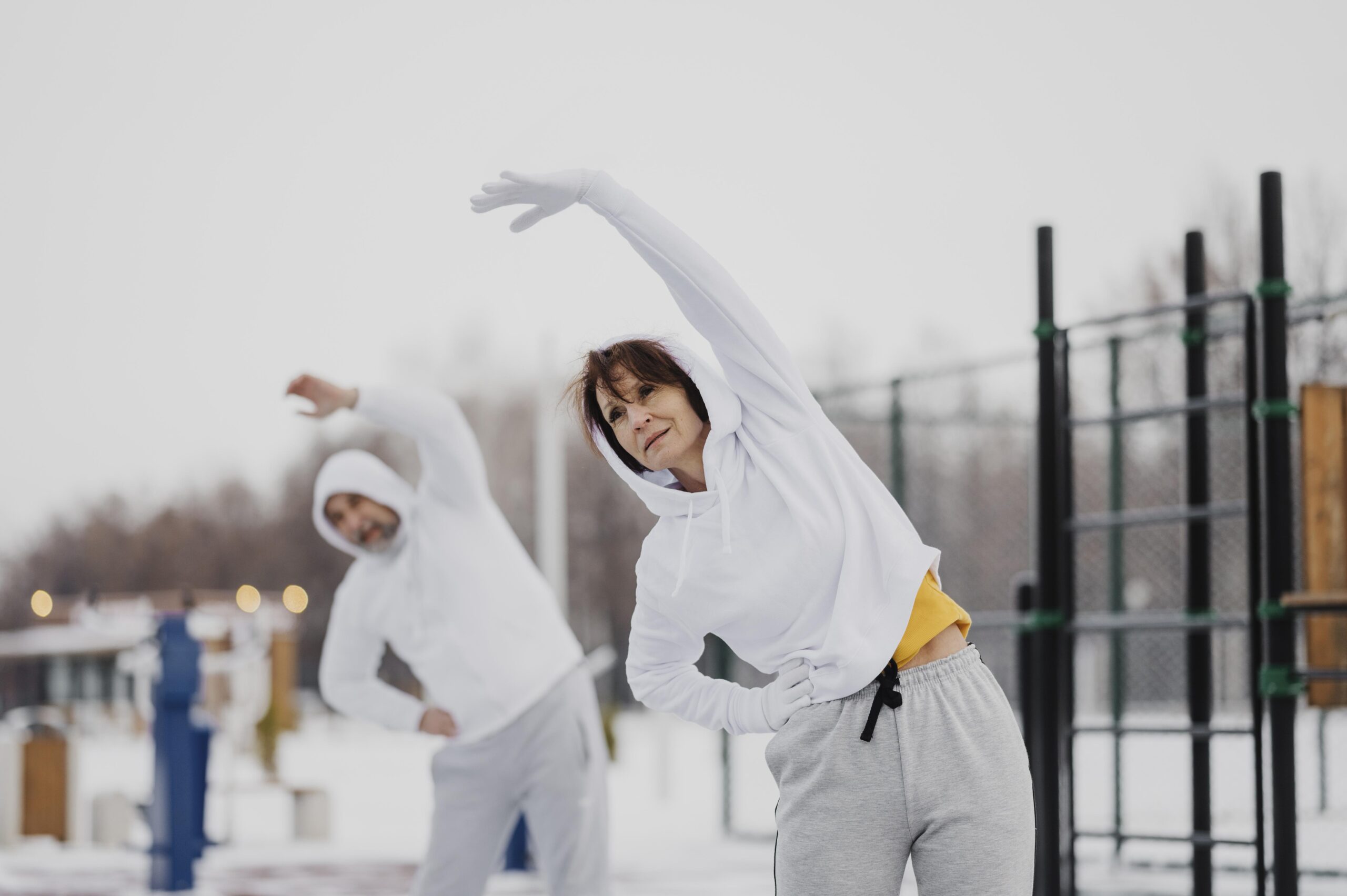
- Stretch. Dynamic stretches such as leg swings, arm circles, torso twists and walking lunges are helpful. Save static stretches for after outdoor activity when muscles are warm.
- Do not forget about hydration. This is important in cold weather as well as in hot. Drink water before, during and after your workout, even if you do not feel thirsty.
- Dress appropriately for the outdoor conditions. Layer clothing and avoid tight clothing which can keep blood flowing freely. The air between the layers help you to keep warm. You can shed layers as your body temperature rises. Wear a hat, scarf/neck gaiter and gloves. Your head, face and neck account for 12% of the body’s surface area and need protected. You can consider using disposable or rechargeable hand/foot warming products. Use a waterproof coat or jacket if it is snowy or rainy. Change out of damp or wet clothes as soon as you can. Proper footwear is also needed. Exercise shoes a half size or one size larger than usual may allow for thick thermal socks and adequate toe movement to permit good circulation. Footwear should have adequate traction to prevent falls and be waterproof. If it will be dark when you are outside, make sure your clothing is reflective so that you may be seen in the dark.
Who should avoid Cold Weather workouts
Certain conditions warrant a discussion with your doctor to see if cold weather exercise is right for you. People with asthma or certain reactive airway conditions, heart problems or Raynaud’s disease may need to take special precautions or avoid cold weather exercise in general. Also, persons who are older and may have balance issues should avoid potential slippery or icy pathways.
Chronic medical conditions such as diabetes (may prevent blood from flowing normally for warmth), thyroid issues (temperature regulation difficulties), Parkinson’s or arthritis (challenging to put on layers or feeling fluid enough to move in the cold), memory problems (may not know how to keep self safe) may need a different exercise strategy. Indoor exercise can be just fine for these individuals. Try to workout near a window where you can still get some sunlight on you.
Special Consideration for Winter Sports
There are several winter sports such as skiing, snowboarding, ice skating or snowshoeing that could benefit from a sports specific preparation. Conditioning for these activities are best done 4-6 weeks in advance of your first outing. Training ideas to focus on include:
- Leg strength: Squats, lunges and step ups build the quadriceps and glute strength helpful for skiing and snowboarding.
- Core Strength: Planks and rotational exercises improve balance and control
- Cardiovascular fitness: Winter sports are demanding. Build endurance with walking, cycling or swimming
- Ankle Stability: One leg stands or using a wobble board with strengthen ankles and build in balance reactions needed for skiing and balancing on slippery surfaces.
We hope you have found this blog helpful. We are here to promote healthy lifestyles as well as help if an injury occurs. Whether its cold, hot or somewhere in between, exercise is always a good idea. See below for additional links to topics related to this blog.
https://www.optimal-pt.com/what-are-your-core-muscles-and-why-are-they-so-important/
https://www.optimal-pt.com/safe-snow-shoveling-tips/
https://draxe.com/fitness/working-out-in-the-cold/
https://healthmatters.nyp.org/the-unexpected-benefits-of-winter-workouts/