Keeping up with your grandkids without getting injured
Grandchildren are a gift and being with them is one of the most satisfying things life can bring. As we age, however, our bodies may not be as strong or as agile as it was when we had children. These biological changes can make us more susceptible to injury when dealing with little people who have unpredictable bursts of activity, are able to have swift change of direction and at times can be unbelievably strong when resisting to do something.
These factors can set you up for falls, injuries and perhaps even an interruption in child care when it is needed. Even the youngest and most fit grandparents can get aches and pains and possibly injury after a visit with grandchildren.
5 Tips to avoid injury while on grandparent duty
- The old Use it or Lose it principle applies to grandparents: If you do not regularly exercise or have not practiced getting on/off the floor in regular life, doing so only when the grandkids are around will have a real impact on your body. Keep an active lifestyle in general. Work your core muscles, strengthen your legs and practice getting up and down from the floor. Workouts that address your core, arms and legs (especially the quadriceps in the front of the thigh and the gluteus muscles in the buttocks). See the link to a Strong Grandma workout video below.
- Get a primer on the equipment that may come with the kids: Know how to adjust the stroller, the child/baby car seat and the pop up playpen/sleeper before you must set them up yourselves. Ask your kids to give you a tutorial and practice with you so that you are comfortable and can do it. If your child likes to use a pocket sling to carry around a baby, have them teach you how to do it too so that your hands may be free while the baby is close and it can save your arms from strain.
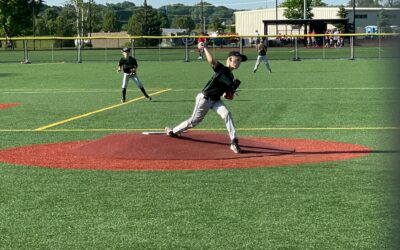
- Pace yourself. Your grandkids may love to play hide and seek all afternoon with you but that may just be too long. Playing baseball for an entire day could set you up for a rotator cuff tear. You need to know when to stop. Any repetitive motion can cause damage to stiff or arthritic joints especially if you are not used to doing it. Listen to your body, stop when you become tired or sore and steer the kids to a different activity or snack break when you need a break. You can do fun things but maybe in smaller dosages.
- Keep your Balance: Carrying squirming toddlers around especially when carrying them up/down stairs, will challenge your balance. If a child starts to move as you lift or carry him, try to put him down or hold tighter and grab something to stabilize yourself (such as the railing if on the stairs). Learn how to lift children properly so you do not overload your body. Squat down a little (bending at knees not your back), keep your back straight, keep the child right in front of you and pulled close (do not lift with arms out extended), then lift straight up. Use your leg muscles to do most of the lift – not your arms or your back. Children can also run off when you least expect it, at home, in a store or outside. Your instinct to immediately run after them can lead to a fall. You may step on a toy, collide with furniture or become unsteady on uneven terrain. To stay safe, focus on your environment in addition to the young child. Look for obstacles in area, know the terrain if you’re outside. Find the clearest path, it may not be a straight line. You can practice your balance by standing on one foot while holding on to a counter with one or both hands. Try to hold for up to 10 seconds with your eyes open on each leg. When that becomes easier over time, try same task with your eyes closed. When that get easier, try to stand on a pillow and repeat same sequence.
- Encourage grandkids be be independent. Constant lifting of children on/off the potty, in/out of a car, stroller or booster seat can make your body hurt. Get a small step stool for use in your house so that they can get up/down from toilet, wash hands in the sink without you needing to hold them up. Ask them to climb up into their car seat before you place all the belts in the right place. Let them help you when they are old enough and capable to do somethings themselves.
Learn more from these helpful links:
https://www.optimal-pt.com/what-are-your-core-muscles-and-why-are-they-so-important/
https://www.optimal-pt.com/ergonomics/
A helpful workout video to watch: Strong Grandma https://youtu.be/m3WlfPHcFYg?si=Nf6IXXnv