If you have healthy lungs, you have a secret weapon to help you cope with stress. Indeed, the answer to your stress response may literally be right under your nose. On any given day, we may take between 17,000-30,000 breaths. It is not something we tend to think about doing. Just like blinking and swallowing, breathing tends to be thought of as natural and involuntary. But maybe we should be thinking about the quality of our breathing. Breathing is the fuel for everything our bodies need to do. It is how we oxygenate and keep our bodies functioning and moving. It can also be a powerful weapon to help us with stress reduction.
WHY ARE WE SO STRESSED AND WHAT DOES BREATHING DO TO HELP?
Our culture and society is very fast paced and stressful. We are bombarded by information through our screens. We are held to tight performance expectations at work. Our children are exposed to so much more visual and auditory stimulation compared to decades ago. Add this on top of performance demands at school, extracurricular activities, sports teams demands, and having a balanced home life – its no wonder we are seeing a high increase in stress and anxiety in our young people and ourselves. Did you know that many persons even with healthy lungs are susceptible to develop dysfunctional breathing patterns due to stress and our reactions to stress? Do you realize that good breathing is the root of all movement and therefore improving breathing can improve other issues like posture, neck and shoulder dysfunction, low back pain and even work or sports performance?
UNDERSTANDING THE FIGHT OR FLIGHT REACTION
Our body controls breathing through both the central nervous system (brain and spinal cord) and the peripheral nervous system (autonomic nervous system). Most people are familiar with the fight or flight concept. This is our autonomic nervous system that guides our response to emotions, pain, fear or stress. Within this system, there are two parts: sympathetic and parasympathetic. Both systems help us to adjust blood pressure and heart rate. In general, the sympathetic system produces a heightened reaction response whereas the parasympathetic is associated with a relaxation response. The sympathetic system is activated by real or perceived stressors such as the emotions of anxiety, fear, fatigue, muscle tension, high blood pressure, depression/low mood.
The parasympathetic system drives relaxation, good breathing and calm emotions. The two bullies in our modern life that impact this system are stress and anxiety. Both are similar companions but are not the same thing. Stress is a direct demand for your attention or performance whereas anxiety is a sense of unease or worry about uncertain things and may drive us to worst case scenario thinking.
BREATHING AS A NERVOUS SYSTEM REGULATOR
Learning to slow down your breathing, research shows, can change the neurological signaling to your brain and can influence your emotions, thoughts and behaviors. Breathing can actually help us regulate these two necessary but opposing systems. If our sympathetic system is the one we mostly operate through, we are living in a state of heightened arousal. This state is known as up-regulation and it negatively changes our breathing patterns by changing the respiratory muscles we recruit in order to breathe. In persons with chronic pain, this state can heighten sensitivity to touch and perception of pain. Reducing the heightened sympathetic state can induce relaxation and the pain response. While anxiety is not a conscious choice anyone would choose for themselves, they do possess the ability to consciously adapt their breathing to help in their anxious state.
THE MUSCLES BEHIND BREATHING
The main muscle we should be using to breathe is our diaphragm. The diaphragm helps us to take a deep breath and to expand our lungs enabling us to take in the oxygen we need efficiently. When we are using this muscle correctly, we are taking a deep belly breath. This type of breathing favors our parasympathetic nervous system which can produce a more calming effect on our emotional state and quality of movement. The diaphragm is also a postural muscle in that it influences our intra-abdominal pressure as it works with other muscles to support the spine. In this way, it helps to provide for the postural stability we need to complete complex movements.
HOW BREATHING MUSCLES GET OVER OR UNDER RECRUITED
In many persons living in our high speed, high information overload lifestyles, we see breathing move away from the stomach and higher into the chest. Because the diaphragm is being under recruited for breathing effort, the accessory breathing muscles must help us. However, these muscles are small and also are used to help us with posture and neck motion. People who are “upper chest breathers” may be susceptible to head, neck and shoulder pain due to accessory respiratory muscle overuse. Learning proper diaphragmatic breathing can unload the accessory muscles enabling improved mobility of neck, the rib cage or thoracic spine and can even improve shoulder motion.
CAN I TEST MYSELF ABOUT MY BREATHING?
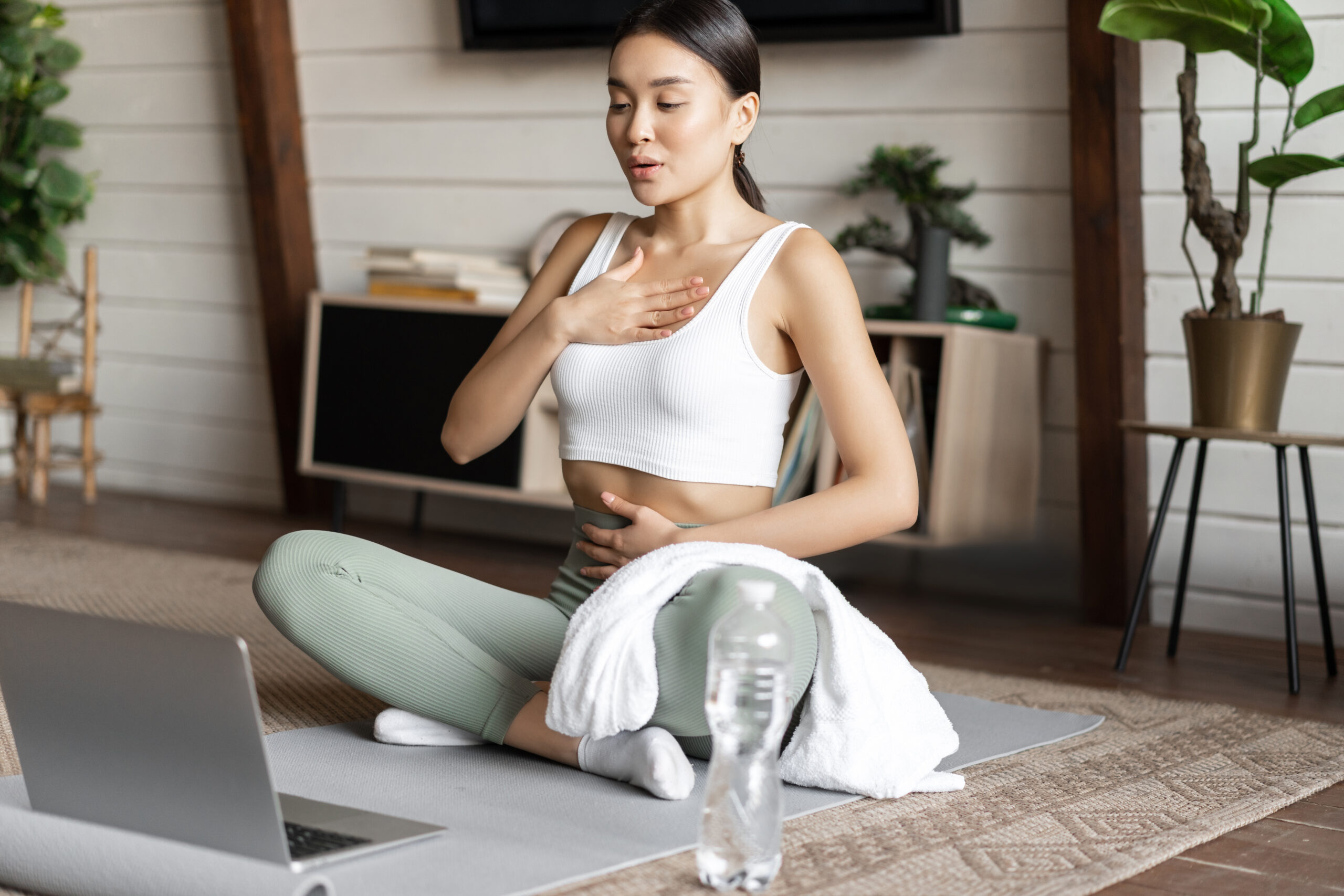
How can you tell what kind of breather you are? No formal equipment is necessary. You can do a very easy check on yourself to assess this. Lie on your back with one hand on your stomach and one hand on your chest. When you breathe, if you feel your hand on your stomach move higher or first, you are doing diaphragmatic breathing. However, if you feel your upper chest move first or higher than your stomach, you are using more accessory muscle power. You can even do this test if you are sitting.
 .
.
WHAT FOCUSED BREATH WORK CAN DO FOR YOU
Breathwork can help you learn to improve the parasympathetic signaling to your nervous system. While it is not a complete cure for anxiety or stress, it can de-escalate your body’s response to them. Breathing a certain way can shift the balance toward the parasympathetic and this can slow down heart rate, breathing and reduce the release of stress hormones. It does the opposite of adrenaline and tells the primitive emotional brain to shift to the more calm thinking brain.
How do you start to learn to do this? It is important that you just begin to notice how your body feels when you breathe. Does your chest feel tight? Do you shoulders hurt? Is your posture more collapsed than tall? How does your head feel? Take 30 sec to a minute just to sense this. If you have health conditions like uncontrolled high blood pressure, you may need to modify some breathing exercises so that you are not holding your breath for too long.
SOME BREATHING METHODS
1. Start by just connecting to your breath and your body. Notice your inhale and exhale, wiggle your toes while doing this and then tap into more senses by becoming aware of your surroundings.
2. Take a deep breath through your nose and then exhale through your mouth with an audible sigh. It may even help to imagine releasing something from your body with the sigh. Try this three or more times until it feels right.
3. You can move on to a three part breath. This is done by inhaling through your mouth focusing on your belly/diaphragm area. Do a deep inhale then then inhale further focusing on your chest. Finish by fully exhaling through your mouth.
4. If you feel anxiety surfacing, try this method: To help your heart rate synchronize with your breathing, Slowly inhale and exhale through your nose for about five or six seconds each. Doing this softly and slowly for a few minutes can help dampen down the sympathetic response.
5. Try 4x4x4x4 breathing: Inhale through your nose for a count of 4. Hold your breath for count of 4. Then exhale for a count of 4 Then remain empty of air for a count of 4.
By adding these breathing methods to your life, you may start to feel more at peace and calm. You can do them anywhere and no one even needs to know. Let the magic of the the breath move you to better health.
https://www.optimal-pt.com/relaxation-exercises-to-help-combat-stress/